



AI & automation
Web development
Branding & design
Consulting & audits

E-commerce revenue up 37.6% in one year, powered by AI

Founded several decades ago, La Maison du Roy is a family business and a leading French name in Baroque and eighteenth-century decorative arts, supplying the Château de Versailles, Jacques Garcia and many others. Yet it relied on an ageing WordPress website, a disconnected point-of-sale system and a catalogue of more than 12,000 products with no editorial architecture. Logiks rebuilt the entire commerce ecosystem, developed a bespoke AI-powered Shopify application and increased online revenue by 37.6% in twelve months.
Client
La Maison du Roy
Date
2026
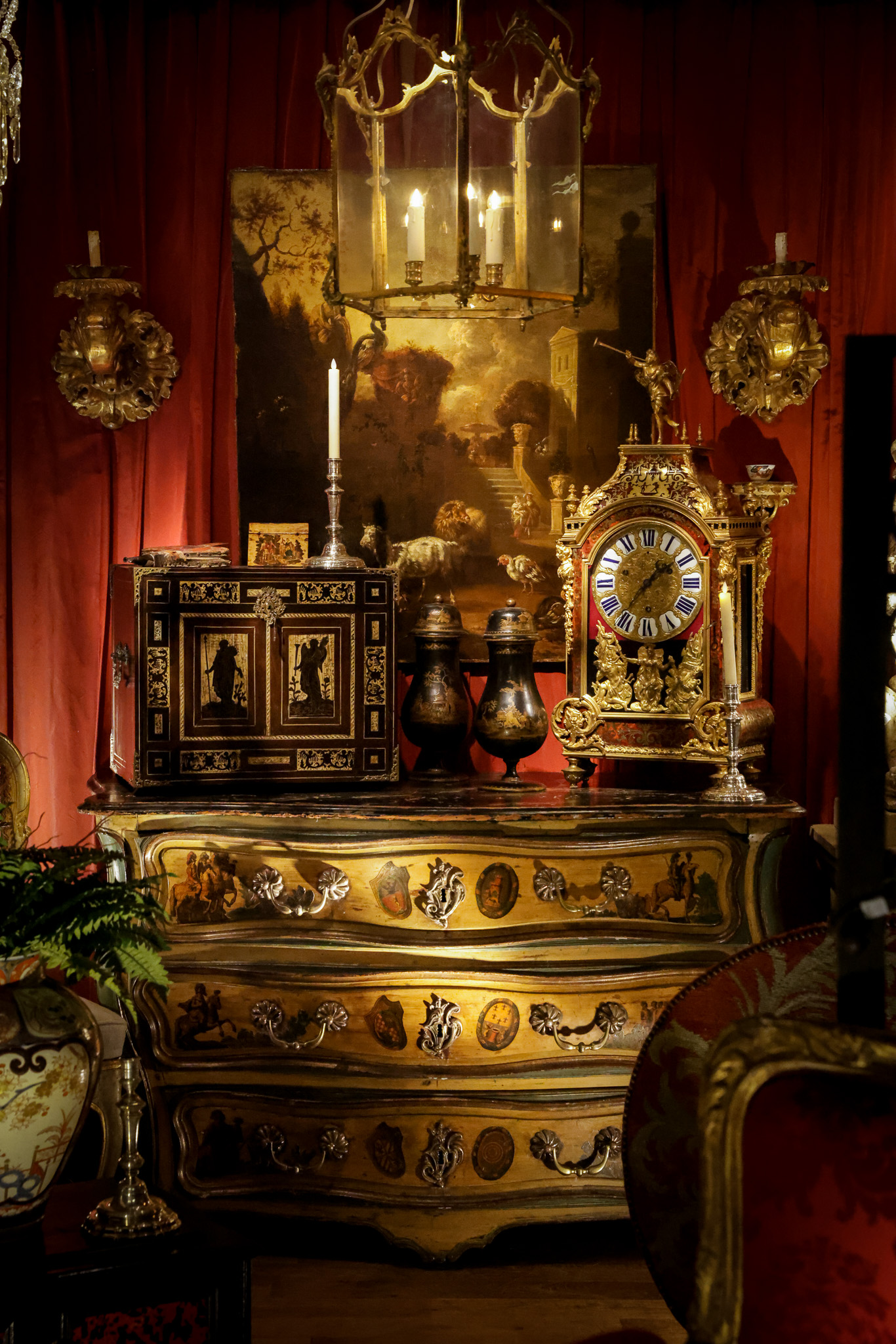
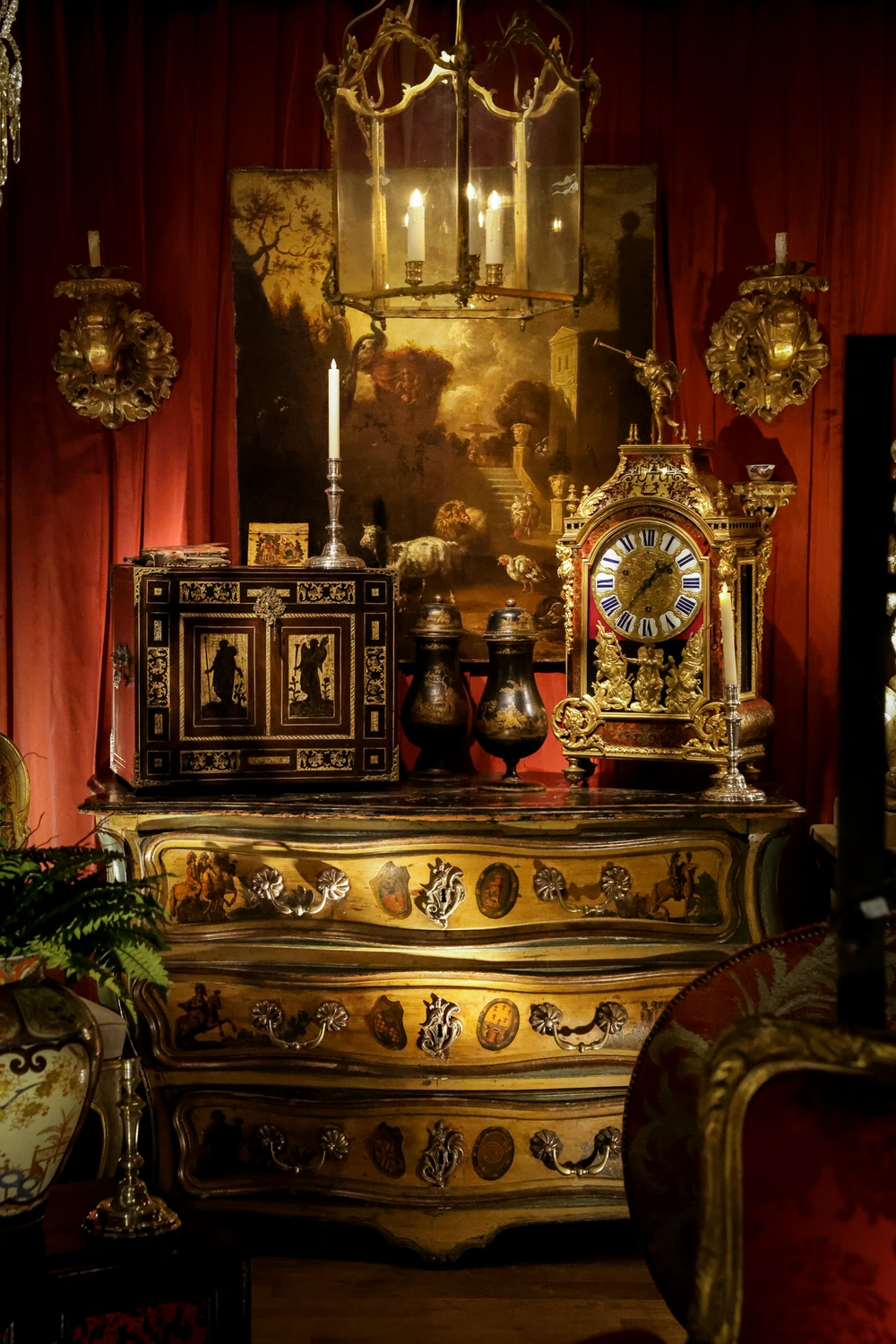
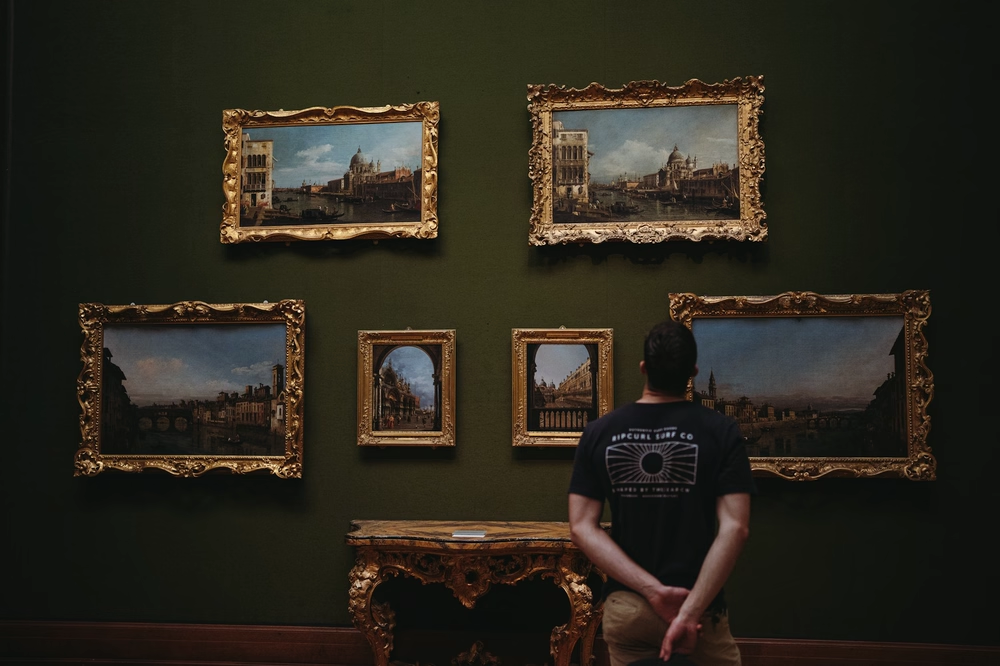
Period interior décor featured in the La Maison du Roy project.
In summary

Project overview

The challenge

Modernise a Baroque retail business with more than 12,000 products, constrained by an ageing WordPress site, a disconnected till and a very slow product-publishing process.

Our work

Redesign the Shopify ecosystem, organise 154 collections and build a bespoke AI application connecting the catalogue, point-of-sale system and editorial production.

The result

Online revenue up 37.6% in twelve months, with product publishing six times faster—from 30 minutes to five.

01 — Context

Context

Founded several decades ago, La Maison du Roy is a family business and a leading French name in Baroque and eighteenth-century decorative arts, supplying the Château de Versailles, Jacques Garcia and many others. Yet it relied on an ageing WordPress website, a disconnected point-of-sale system and a catalogue of more than 12,000 products with no editorial architecture. Logiks rebuilt the entire commerce ecosystem, developed a bespoke AI-powered Shopify application and increased online revenue by 37.6% in twelve months.
02 — Challenge

The challenge

A family business founded several decades ago and the custodian of Baroque heritage passed down from one generation to the next, La Maison du Roy celebrates the art of living and the detail of the eighteenth century through an unapologetic guiding principle: Baroque, Baroque and Baroque. Its distinctive character lies in a rare combination of authentic antiques and contemporary creations inspired by the eighteenth century, made by European craftspeople who account for 90% of its suppliers.

Three locations form its physical presence: the Passage Jouffroy boutique in Paris’s 9th arrondissement, a stand at the Marché Serpette in Saint-Ouen (the world’s largest antiques market, established in 1885), and a third at the Château du Champ de Bataille, Jacques Garcia’s Normandy residence, alongside Maison Trudon. Together, they support a catalogue of more than 12,000 products in stock, with several hundred new pieces introduced each year.

This exacting approach to curation has made the business an official supplier to the Palace of Versailles, as well as to Jacques Garcia—the interior designer behind, among other landmarks, Hôtel Costes, La Mamounia and 35 rooms at the Louvre Museum—and several other custodians of French heritage.

Yet the digital experience did not live up to that standing. Beneath the surface, the website combined four structural weaknesses.

  • A catalogue without an architecture.

    More than 12,000 listed products, but no genuine editorial classification. The catalogue’s depth worked against it: customers could not find what they were looking for.

  • A brand image aged by the old website.

    Baroque is often regarded as “dusty” and suffers from a cultural lack of desirability. Poorly designed, the existing website reinforced that stereotype instead of overturning it. The gap between promise and experience kept widening.

  • A fragmented technology landscape.

    The shops ran on KintPV, the website on WordPress and customer records were scattered across systems. Nothing was unified, and there was no modern management tool.

  • An operational bottleneck in product publishing.

    The business is highly seasonal, yet manual publishing constrained its capacity at peak times. SEO growth was itself capped by that seasonality, leaving the purchasing experience as the only meaningful lever for online growth.

The challenge was therefore not cosmetic. It was to bring the digital experience up to the level of a brand that supplies some of the finest addresses in French heritage. Build a foundation, rather than repaint a façade.

03 — Solution

The solution

We orchestrated a complete redesign of the commerce ecosystem across six complementary workstreams.

  • Stage 1. Architect the catalogue.

    Before any visual or technical work could begin, we had to structure what had never been structured. We analysed more than 12,000 products, identified families and subfamilies, and built a taxonomy capable of accommodating the house’s own creations, works by partner artists and antiques. In total, 154 collections were defined. Every product finally has its place—and so does every customer.

  • Stage 2. Redefine the brand’s expression without changing its identity.

    The logo and colours represented valuable brand equity that would have been risky to alter. The subtler challenge was to redefine the visual codes through which the brand expressed itself: layout, photography, hierarchy and atmosphere. We needed to create an experience that was both premium and contemporary, overturn the cliché of “old-fashioned Baroque” and make an aesthetic often overlooked by contemporary tastes desirable again. The objective was not to transform the identity, but to modernise how it was expressed.

  • Stage 3. Replace the point-of-sale system.

    KintPV integrated poorly with Shopify, causing repeated bugs and other recurring issues. We led the migration to Shopify POS, an inherently complex operation involving data migration, business continuity, team training and accounting integration.

  • Stage 4. Create a hybrid website that combines the strengths of each platform.

    To retain complete design freedom while benefiting from Shopify’s management capabilities, we chose an architecture with Webflow on the front end and Shopify on the back end. A bespoke real-time synchronisation layer, built on Shopify Headless and the Webflow API, allows the two platforms to communicate without a limiting intermediary. Only a few hundred e-commerce businesses worldwide use a comparable architecture.

  • Stage 5. Build Le Scribe du Roy, the company’s bespoke application.

    No product on the market covered La Maison du Roy’s specific invoicing and product-publishing requirements. We therefore designed and developed Le Scribe du Roy, a proprietary internal Shopify application that generates invoices in one click and manages purchase orders within the Shopify workflow.

    For product publishing, a proprietary AI trained on La Maison du Roy’s own corpus assists with writing product pages in the company’s tone, vocabulary and aesthetic codes. A task that once took 30 minutes per product now takes five. During seasonal peaks, the team no longer endures the rush; it orchestrates it.

  • Stage 6. Rationalise the technology stack and prioritise sovereignty.

    The old ecosystem layered WordPress, Elementor, Mailchimp and several plugins, each adding technical debt and fragility. The new stack was deliberately consolidated around Webflow and Shopify, with one guiding principle: where performance and budget allow, favour French solutions. Mailchimp was therefore replaced by Brevo, with no loss of functionality and a corresponding gain in digital sovereignty.

    Do more with less—and choose French technology where possible.

04 — Impact

The impact

Three forms of evidence across three dimensions, with mutually reinforcing effects.

  • Commercial evidence: online revenue increased by 37.6%.

    During the twelve months following launch, e-commerce revenue rose by 37.6% compared with the preceding twelve months. The result is all the more significant because organic-search growth in this business is structurally constrained by Christmas seasonality. The redesigned purchasing experience was indeed the engine of growth.

  • Operational evidence: restored capacity and recurring savings.

    Le Scribe du Roy reduced product-publishing time sixfold, from 30 minutes to five, saving several thousand euros each year. More importantly, the team can now absorb seasonal peaks without overload—peaks that had previously created a critical bottleneck in annual commercial performance.

  • Brand evidence: a successful aesthetic repositioning.

    The company changed its image without changing its logo. A Baroque aesthetic that could once be perceived as old-fashioned is now presented in a more contemporary and desirable light. The transformation reaches beyond digital and redefines the company’s place in its market.

Beyond the figures, we would like to recognise the flexibility, trust and patience shown by the La Maison du Roy team throughout the project. Redesigning an entire commerce ecosystem without interrupting daily operations is no small undertaking; it would not have been possible without their availability and understanding.

La Maison du Roy remains a distinctive Parisian destination for anyone seeking objects inspired by the eighteenth century—or simply pieces with genuine character. Its world can be discovered at Passage Jouffroy, Marché Serpette and the Château du Champ de Bataille.

The art of turning ideas into digital realities

Explore our portfolio and imagine what we could achieve together to take your online presence to new heights.

Your competitors
will be left behind